Valentine's Day Words in English for Kids

Teach 24 Valentine’s Day words and phrases about friendship, kindness, cards, colours, and familiar symbols. This guide to Valentine's Day Words in English for Kids: Vocabulary and Activities provides concise meanings, natural sentence models, and games for different ages. Children need not celebrate the day to participate. Present it as a cultural theme with inclusive messages such as “You are a trusted friend” or “Thank you for helping me.” The theme welcomes multilingual children and different family traditions.
📥 Valentine's Day Word and Phrase Practice
A friendly vocabulary, activity, and recall sheet for young English learners
Leave your email — we'll send the PDF to your inbox.No spam — the PDF plus one short reminder. Unsubscribe anytime.
A Practical Starter Vocabulary
Teach six to eight words per session. Start with objects such as a card, heart, flower, or gift, then add feelings and actions. Put each item into a short sentence.
Treat Valentine's Day Words in English for Kids: Vocabulary and Activities as working vocabulary, not a test list. Practise six to eight items through pictures, movement, speech, and writing before adding another group.
Using the Words in Natural Phrases
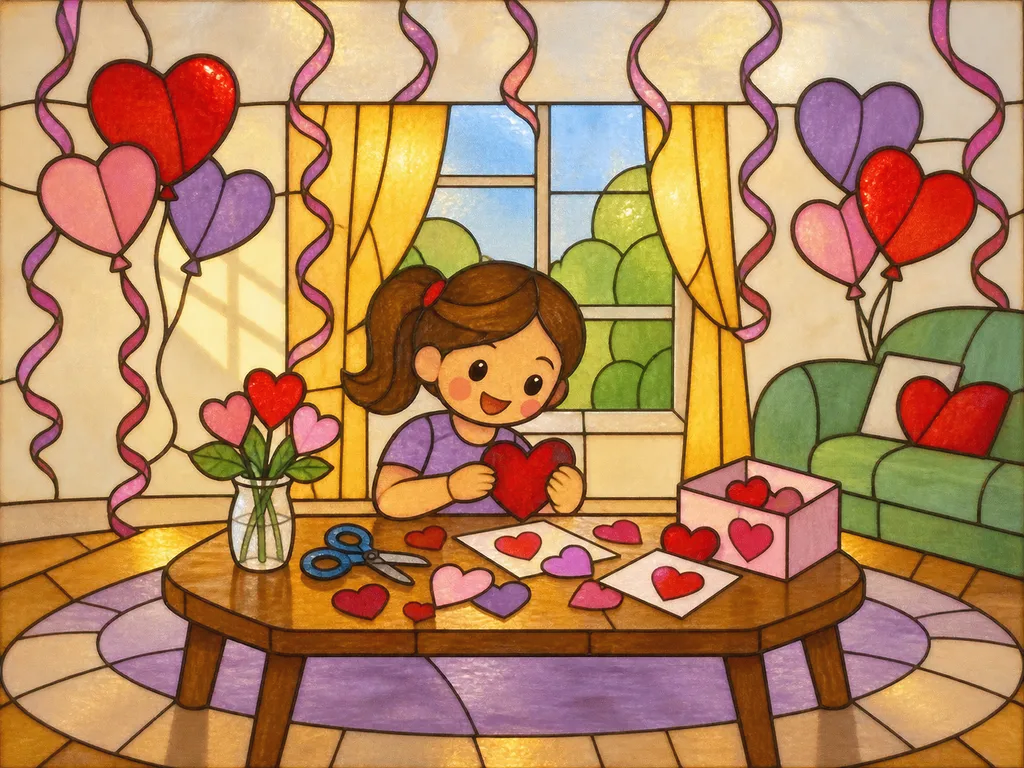
Move from labels to speech by pairing nouns with verbs: make a card, draw a heart, give a gift, smell a flower, share chocolate, and celebrate with friends. Then change one part: “I drew a pink heart” becomes “I drew a purple flower.”
For Valentine's Day Words in English for Kids: Vocabulary and Activities, choose warm sentence models that do not assume romance. Try “You are kind,” “Thank you for being my friend,” “I like playing with you,” and “This card is for my family.” These lines suit classmates, relatives, and friends across cultures.
Older children can connect ideas with because, when, and but: “I made a card because my friend helped me,” or “We do not celebrate Valentine’s Day, but we know its symbols.” vocabulary gains purpose while children describe their customs honestly.
Activities for Different Ages
School-age kids: Use four picture cards. Say a word and ask your child to point, touch, or hold up the matching picture. Add actions for verbs: pass an object for share, curve both hands for heart, and point to the face for smile. Keep turns brief and vary the word order.
School-age kids: Make a word-card sorting game. Children can group cards as people, objects, colours, feelings, and actions. More than one answer may work: rose is an object and a plant, while love can be a feeling or verb. Ask the child to explain each choice in one sentence.
School-age kids: Compare messages for different readers. A friend’s note may say, “Thanks for always listening,” while a family note may say, “Thank you for taking care of me.” Older learners can discuss Valentine’s Day in films, shops, or social media and compare those images with local customs.
Short Practice Routines That Build Recall
Practise Valentine's Day Words in English for Kids: Vocabulary and Activities in three steps: see it, say it, use it. Show a rose, ask for the word, then invite a sentence: “The rose is red.” The next day, ask for the word before showing the picture.
Games should require a language choice. In “Odd one out,” give three words such as heart, rose, and share. Your child identifies the action and explains why. In online lessons, LearnLink tutors can use the same pattern with pictures, questions, and brief speaking turns suited to the learner’s age.
Make a Kind Message
Choose one person, one kind word, and one vocabulary object. Complete: “Dear ___, you are ___. I made this ___ for you.” Read it aloud, change one part, and read it again.
Finish with three words, two phrases, and one full sentence. If a child cannot recall a word, let them describe or point to it. Supply the word, repeat the sentence together, and review it later.
Common Mistakes and Clear Fixes
Children may confuse Valentine, valentine, and Valentine’s Day. Capitalise the day’s name. A lowercase valentine can mean a card or greeting. The apostrophe in Valentine’s comes before the final s: “We made Valentine’s Day cards.”
Children may overuse love in messages. English offers less personal choices: like, care, kind, helpful, and supportive friend. Include consent when teaching hug. “May I have a hug?” is better practice than telling a child to hug someone.
Distinguish chocolate from chocolates. “I like chocolate” refers to the food generally. “There are three chocolates in the box” means three pieces. Model the correct phrase once, then have your child repeat the full sentence rather than the isolated word.
- Practice five Valentine’s words with children ages six to eight using picture cards.
- Model each word slowly, then ask your child to repeat it twice.
- Use one simple storybook to correct confusing words through context and pictures.
- Compare two commonly mixed words, such as heart and card, in sentences.
- Finish with a three-minute matching game and praise accurate pronunciation immediately.
When a word has several meanings or pronunciations, Cambridge Dictionary is a useful check before turning it into child-friendly examples.
Frequently Asked Questions
Does My Child Need to Celebrate Valentine’s Day to Learn These Words?
No. Teach the vocabulary as cultural knowledge and practice words about friendship, colour, feelings, and kindness. Your child can compare the day with local customs or explain that your family does not celebrate it. Never ask children to express feelings they do not hold. A message of thanks or friendship is enough.
How Many Valentine’s Day Words Should We Teach at One Time?
For a young beginner, start with four to six words shown through pictures or objects. Add items after your child can recognise and use most of the first group. Older or more confident learners may handle eight to twelve words, especially familiar ones. Brief reviews over several days support recall better than one long session.
How Can a Multilingual Family Practise Without Translating Every Word?
Use pictures, gestures, objects, and short English definitions before translating. Valentine's Day Words in English for Kids: Vocabulary and Activities can connect with languages your child knows: compare similar words, notice different sounds, or discuss whether a symbol keeps its meaning. Translation remains useful when a word is unclear.
What If My Child Feels Shy Saying Words Such as “Love” or “Hug”?
Offer other ways to participate. Your child can say “You are kind,” “Thank you,” or “You are a close friend.” They may describe a picture instead of writing a personal message. Explain that hugs require permission and nobody must give one. Language practice should help children state their boundaries and understand other people’s words.
Use these steps for the next practice session:
- Start with six words and ask your child to point to each matching picture.
- Practise two short phrases, then change one word in each phrase.
- Finish with one kind message and review the same vocabulary the next day.
If your child needs steady speaking practice, start small — choose a trial lesson.
Stay updated on our latest tips and resources by following us on Instagram LearnLink.